As heard on New Wall Street Unplugged “Don’t sign another contract before you listen to this” · episode 1391 with Frank Curzio Listen also on The Stacking Benjamins Show All appearances
The Movement  /  Cy Pres & Residual Funds
For class counsel, defense counsel & settlement administrators

The class was harmed by a contract it never read. We teach people to read it.

The Contract Literacy Movement, Inc. is a nonprofit that runs free, plain-English workshops on the lease, the loan, the account agreement and the terms of service — the documents at the center of most consumer class actions. When a settlement leaves money that cannot reach the class, we put it to work for people just like them, account for every dollar, and report back to counsel and the court.

Florida not-for-profit corporation 501(c)(3) application pending No ties to any party, counsel or court
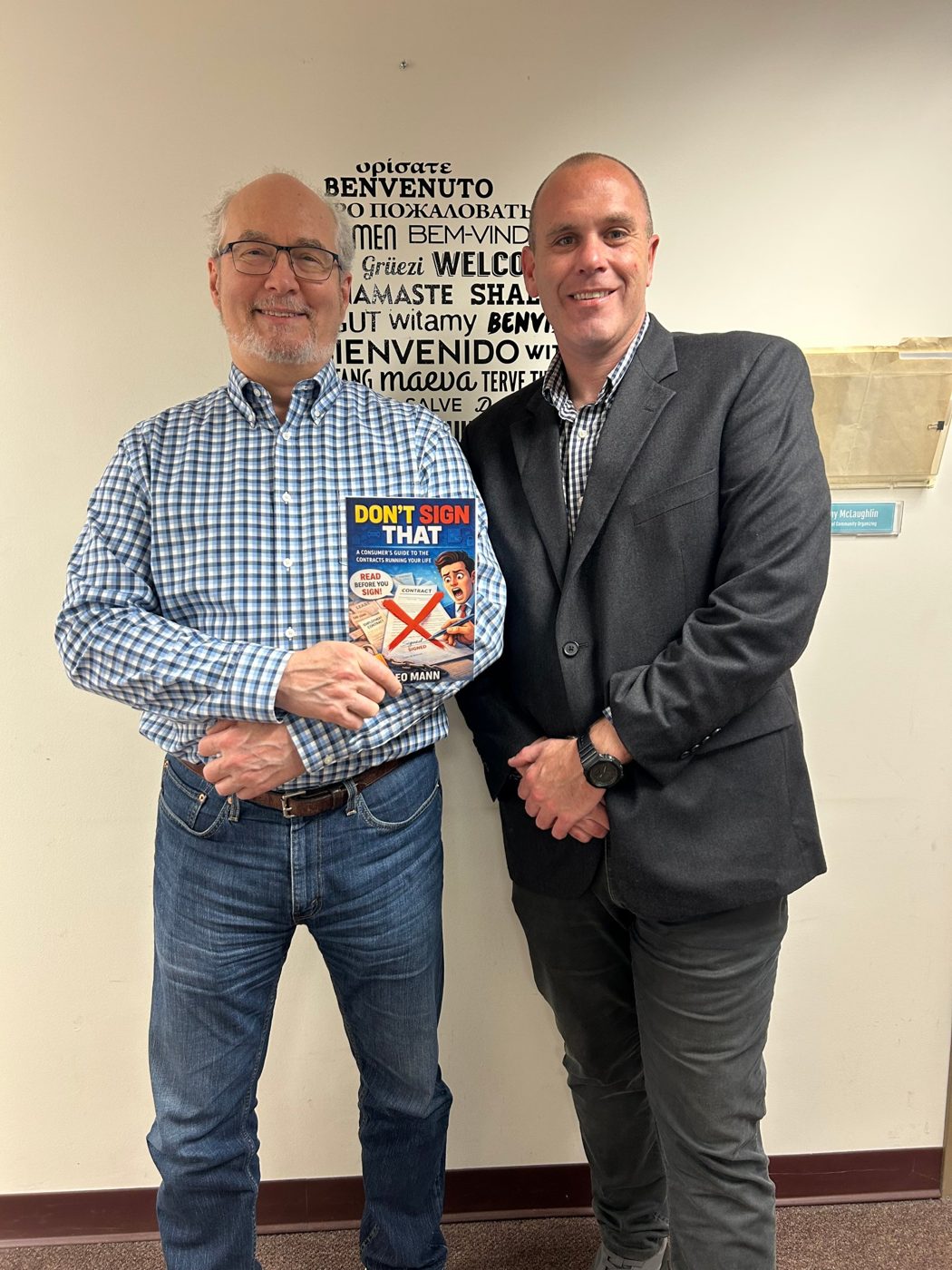
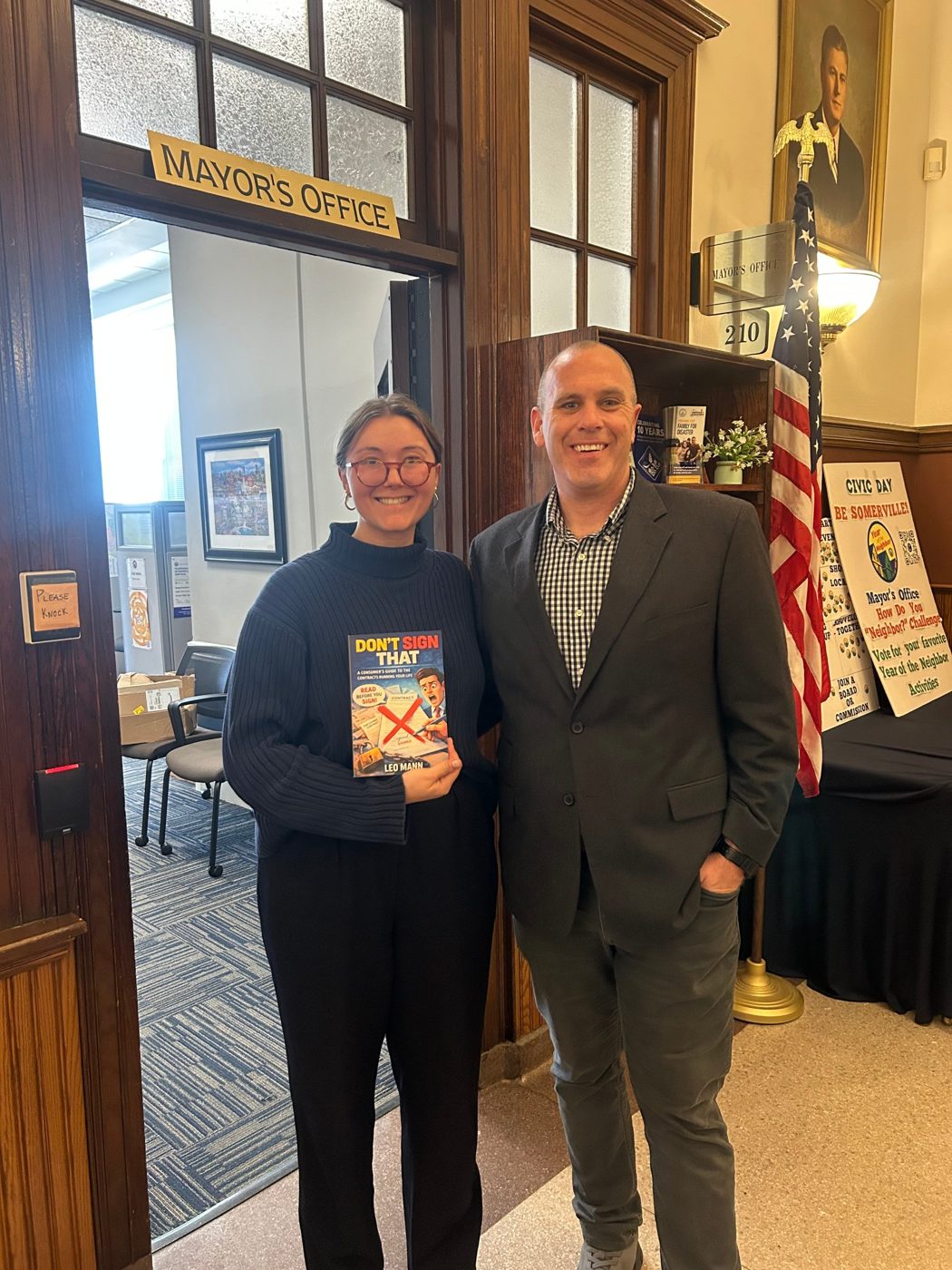
Brenna Broderick of the Somerville Mayor’s Office holding Don’t Sign That, with Chris Vining of The Contract Literacy Movement outside the Mayor’s Office at Somerville City Hall
City of SomervilleBrenna Broderick, Office of the Mayor, with Chris Vining of The Contract Literacy Movement.
David Gibbs, Executive Director of the Community Action Agency of Somerville, holding Don’t Sign That, with Chris Vining
Community Action AgencyExecutive Director David Gibbs with Chris Vining.
Delivered, not proposedSomerville · Sept. 2026
For your file

The recipient, in one page.

What a careful lawyer checks before writing an organization’s name into a motion. Everything here is repeated, under oath, in our draft declaration.

Request the full packet
Proposed recipient
The Contract Literacy Movement, Inc.
Organized as
Florida not-for-profit corporation
Tax status
501(c)(3) application pending with the IRS. Gifts are received through our fiscal sponsor, Fiscal Sponsorship Allies, until a determination issues. Current status documents travel with every packet.
What we do
Free contract-literacy workshops, classroom kits and a six-module video curriculum, built around the paperwork people actually sign.
Strongest fit
Consumer-contract classes: overdraft and NSF fees, auto-renewal, consumer lending and auto finance, rental housing fees, debt collection.
Use of funds
Restricted to the purpose stated in our declaration and approved by the court. Nothing goes to general operations.
Reporting
Written report to counsel within twelve months of receipt, filed with the court on request.
Independence
No relationship with any party, counsel or judge. Nothing of value offered to anyone in connection with a nomination.
A street lamp against an open sky
cy pres
/ˌsiː ˈpreɪ/ · Law French, “as near as possible”

The doctrine that sends what is left of a class settlement to the use that comes closest to benefiting the class that could not be paid.

Cy pres, plainly

Every settlement leaves money behind. The question is where it does the most good.

Checks go uncashed. Class members move and cannot be found. Some shares are too small to mail. When the money cannot practically reach the people it was meant for, the parties propose a recipient whose work comes as near as possible to benefiting them, and the judge decides.

The test is nexus. Federal courts ask whether the recipient’s work reasonably approximates the interests of the class and the objectives of the underlying claims. A charity with a good mission is not enough. The mission has to fit the case.

Ours fits a particular kind of case better than almost anyone’s, and we can tell you why in one sentence: when the claim is about what a contract said, the best use of the remainder is teaching people to read the contract.

See Nachshin v. AOL, LLC, 663 F.3d 1034 (9th Cir. 2011); Dennis v. Kellogg Co., 697 F.3d 858 (9th Cir. 2012); In re Baby Products Antitrust Litig., 708 F.3d 163 (3d Cir. 2013). Courts in several circuits also require that further distribution to the class be infeasible first, which is why we pursue true residuals.

The nexus

Your case was about a document. That document is our curriculum.

The bank’s account agreement. The renewal clause. The retail installment contract. The lease. Most consumer class actions are, at bottom, a fight about a page the class member signed and nobody explained.

01

Overdraft & NSF fee classes

The contract at issue
The deposit account agreement and fee schedule

We teach account holders where the fee terms actually live, what “available balance” means on the page, and how to catch a charge before it posts.

Module 1 · How to Read Any Contract
02

Auto-renewal & subscription classes

The contract at issue
The terms of service and renewal terms

The click-to-agree contract, the renewal and price-change clauses, the cancellation path and the arbitration clause hiding underneath all of it.

Module 5 · Software & Digital Terms
03

Auto finance & consumer lending

The contract at issue
The retail installment sales contract

The APR against the advertised rate, the add-ons rolled into the amount financed, and the four boxes a borrower should read before the pen comes out.

Module 3 · Auto Loans & Leases
04

Rental housing fee classes

The contract at issue
The residential lease

Security deposits, joint-and-several liability, early termination, auto-renewal and the fees-and-penalties section that turns a $1,400 rent into something else.

Module 2 · Residential Leases
05

Debt collection classes

The contract at issue
The credit agreement behind the collection letter

What the original agreement actually obligated, how fees and default terms work, and what a consumer should ask for in writing before paying a dollar.

Module 1 · How to Read Any Contract
06

Employment & workplace classes

The contract at issue
The offer letter and the agreements stapled to it

Arbitration and class-waiver clauses, non-competes, invention assignments and the onboarding paperwork almost no new hire reads.

Module 4 · Employment Offers & IP
$440,998

in residual funds awarded to a financial-literacy organization in a bank fee class action decided on contract terms.

Courts have already said yes to this logic

Financial literacy has passed the nexus test. Contract literacy is one step closer to the claim.

In Figueroa v. Capital One, a class of account holders charged out-of-network ATM balance-inquiry fees under their account agreement, the Southern District of California approved the residual to the Jump$tart Coalition for Personal Financial Literacy. The parties argued, and the court accepted, that financial literacy would help class members understand fee disclosures like the one at the heart of the case.

Our argument is tighter. Jump$tart teaches money. We teach the exact kind of document the class was litigating, line by line, to the people most likely to sign the next one.

Figueroa v. Capital One, N.A., No. 3:18-cv-00692-JM-BGS (S.D. Cal.), Order on Joint Motion to Approve Settlement Administration Fees for Secondary Distribution and Designation of Cy Pres Recipient (ECF No. 100), awarding $440,998.02.

Proof · Somerville, Massachusetts · September 2026

Three rooms. One month. Every host wrote back.

Before we asked anyone for a dollar of settlement money, we did the work. In September 2026 the program went live in Somerville with three of the city’s anchor institutions: the City of Somerville, which hosted a training for its frontline staff; the Somerville Chamber of Commerce, for the small-business owners who sign commercial leases and vendor contracts; and the Community Action Agency of Somerville, for the housing advocates who sit across the table from tenants every week. Every session was free. Books were donated. Nothing was sold in the room.

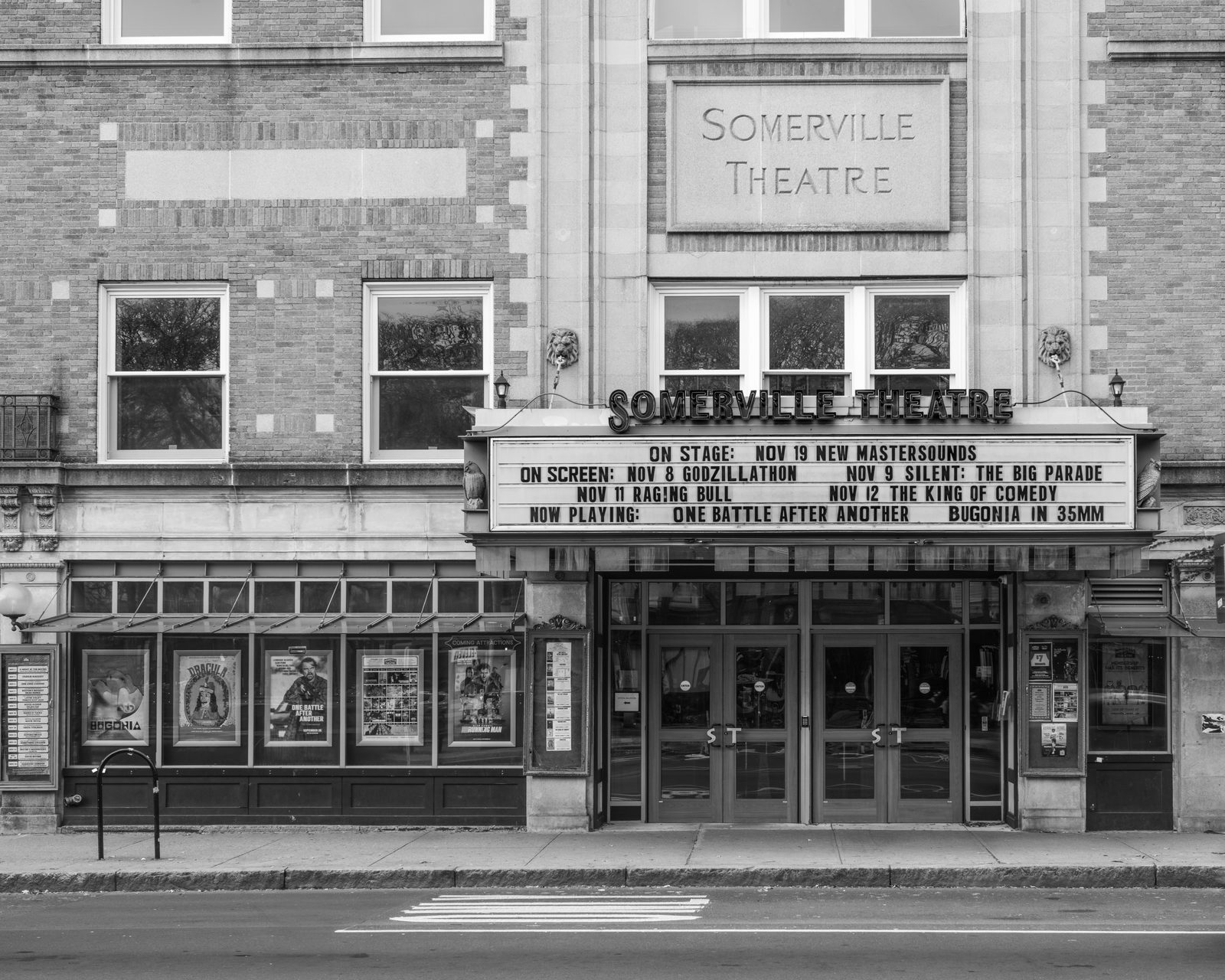
The Somerville Theatre in Davis Square, Somerville, Massachusetts
Somerville, Massachusetts

A city of renters, small businesses and working families. Exactly the people on the other end of a class notice.

Brenna Broderick holding Don’t Sign That with Chris Vining outside the Mayor’s Office, Somerville City Hall
Room one · City Hall

The City of Somerville

Brenna Broderick, Community Partnerships Liaison in the Office of the Mayor, with Chris Vining of The Contract Literacy Movement. The City brought in the people its residents call first.

David Gibbs, Executive Director of the Community Action Agency of Somerville, holding Don’t Sign That, with Chris Vining
Room two · Housing advocates

Community Action Agency of Somerville

Executive Director David Gibbs with Chris Vining. The session was built around the leases the agency’s clients actually sign.

Room three · Main Street

Somerville Chamber of Commerce

Owners and operators working through the commercial lease, the vendor agreement and the personal guarantee buried inside so many of them.

“Following up to say an enormous thank you for generously providing the city with yesterday’s workshop. It was deeply informative and engaging — it had me nervously looking for my own lease to see what’s on that fearsome page 6!”
Brenna BroderickCommunity Partnerships Liaison, Office of the Mayor, City of Somerville
“Thank you for the workshop. We truly appreciate it. I’ve heard from multiple members how helpful it was. I’ve also talked to several businesses about the worth of hearing an expert like yourself explain, in plain language, the contractual traps we can fall into. The time was very valuable and we appreciate the opportunity!”
Jennifer LawrenceExecutive Director, Somerville Chamber of Commerce
“Thank you Leo! That was a great presentation; I certainly learned a few things.”
David GibbsExecutive Director, Community Action Agency of Somerville
10 of 10

Independently field-tested. In a focus group of ten, all ten participants completed a full video module, and eight of ten retained the core material after a single viewing.

Who the money reaches

Every class is a street like this. Every street signs something on Monday.

Class members are not abstractions. They are the renter above the pizza shop, the owner who personally guaranteed the storefront lease, the account holder who paid $35 three times in one week. A settlement check makes them partly whole for the last contract. A cy pres award can do what a check cannot: make the next signature an informed one.

A busy main street block of storefronts and apartments above them
Renters & account holders
A small brick storefront with a red door in late-afternoon light
Small-business owners
Neighbors gathered at a street corner outside a neighborhood restaurant
Working families
A corner shop at a quiet intersection
First-time borrowers

Fifty people in the room. A thousand more on the host’s own channels.

Every workshop comes with a twelve-month community license, so the host can put the full video series in front of up to 1,000 of its own members.

Illustrative photographs.

Use of funds

What a residual buys, in numbers a court can hold us to.

“General operations” loses cy pres motions, and it should. Every award we accept is tied to a budget in our declaration, spent on what it says, and reported back. The unit is one free community workshop.

Don’t Sign That by Leo Mann, fifty copies of which are given away at every workshop One workshop
$10,000per workshop, all in

A 30-year contract attorney at the front of a room that could never afford one.

People in the room, free50
Copies of Don’t Sign That given away50
Student workbooks and specimen documents50 sets
Host members reached by 12-month video licenseup to 1,000
Assessment and written impact reportIncluded
Program share of every dollar90%

About $9.52 per person reached.

$25,000

Two workshops and four classrooms

Two free community workshops plus four classroom kits, each with thirty books, thirty workbooks and a teacher handbook, for schools in the communities the class lives in.

2,220people reached
$50,000

A five-workshop city series

A full series in one city, built with its government, community-action agency, chamber and library, so every corner of the community gets a room.

5,250people reached
$100,000

A ten-workshop state program

Ten workshops across the state where the class is concentrated, with a delivery plan matched to the class definition and a single consolidated report.

10,500people reached

Reach figures assume full enrollment; our report to counsel states actual attendance and enrollment. Awards above $100,000 are scoped case by case with a written plan before filing. Books and curriculum licenses are supplied by Leo Mann Publishing LLC, the founder’s publishing company, below list price; that related-party relationship is disclosed in every recipient declaration.

Our commitments to the court

Six promises, made in writing before you ever file our name.

Most cy pres nominations die on the same handful of problems. We have answered each of them in advance.

01

Restricted money

Every award is booked as restricted to the purpose the court approves and spent on exactly what our declaration says. Nothing is swept into general operations.

02

Geography follows the class

A Florida class funds Florida workshops. A California settlement under California law comes with a California delivery plan. We match the program to the class definition.

03

A report in twelve months

Dollars spent, workshops held, people served and what they learned, in writing to counsel within twelve months of receipt and filed with the court on request.

04

Complete independence

No relationship with any party, class counsel, defense counsel or judge. No fee, referral, commission, board seat or anything of value to anyone in connection with a nomination. Any relationship that ever arises is disclosed in writing.

05

We never contact chambers

Every communication about a matter runs through counsel. If the court has questions about us, we answer them in writing, through the parties.

06

Residuals, not substitutes

We seek money that cannot practically reach class members after real payments to the class, not settlements that send money to charity instead of to the people who were harmed.

State-court residuals

Where the statute favors legal aid, we bring a joint proposal.

Several states route residual funds to access-to-justice programs. We do not compete with legal aid for that money. We propose to share it, so the court gets both halves of the same problem: representation for people already in trouble, and education for the people who are about to sign.

ILIllinois
735 ILCS 5/2-807

In state-court common-fund settlements, at least half of residual funds go to eligible legal aid organizations, and the court may direct the rest to other nonprofits for good cause. We propose a 50/50 joint designation: legal aid takes the access-to-justice half, we take the education half.

MAMassachusetts
Mass. R. Civ. P. 23(e)

Residuals may go to nonprofits that benefit the class or to the Massachusetts IOLTA Committee, which must receive notice. We come ready to split with IOLTA or a legal services program, and our Massachusetts work is already running in Somerville.

CACalifornia
Code Civ. Proc. § 384

Residuals go to nonprofits that further the purposes of the action, child advocacy programs or legal services for the indigent, with California consumers benefiting. Every California award comes with a California delivery plan and California workshops.

How it works for counsel

Tell us where the case is. We will hand you the paperwork.

Moment one

When the settlement is drafted

Many agreements name the recipient before preliminary approval. If you think of us here, we send a case-specific nexus paragraph the same week.

Moment two

At final approval

When the agreement says the recipient is “to be agreed by the parties and approved by the Court,” the seat is open. We give both sides a recipient neither has to argue about.

Moment three

At the residual distribution motion

Six to eighteen months after final approval, once the uncashed checks have expired and the parties finally know what is left. This is where most residual money is placed, and where a recipient with a declaration already drafted saves your team an afternoon.

What lands on your desk, so the filing costs your team nothing.

  1. A two-page proposalMission, nexus to consumer-contract classes, and what each award level buys.
  2. A case-specific nexus paragraphNaming the contract at issue in your case and the module that teaches it.
  3. A draft recipient declarationWho we are, how the funds will be used, and our independence from the parties and counsel.
  4. A use-of-funds plan and budgetWorkshops, locations matched to the class, and people reached.
  5. Status documentsW-9, Florida registration, IRS submission and fiscal-sponsor confirmation.
Request the packet
For defense counsel

A recipient your client can actually sign off on.

The defendant has to agree to the cy pres recipient, and no bank or lender wants to fund the advocacy group that sued it. We are not that group. We do not litigate, we do not lobby, and we do not take sides against any industry. We teach people to read what they sign, which is the outcome every well-run lender says it wants.

When the residual question comes up at the table, we are the neutral, education-only answer that lets everyone move on to the next line of the agreement.

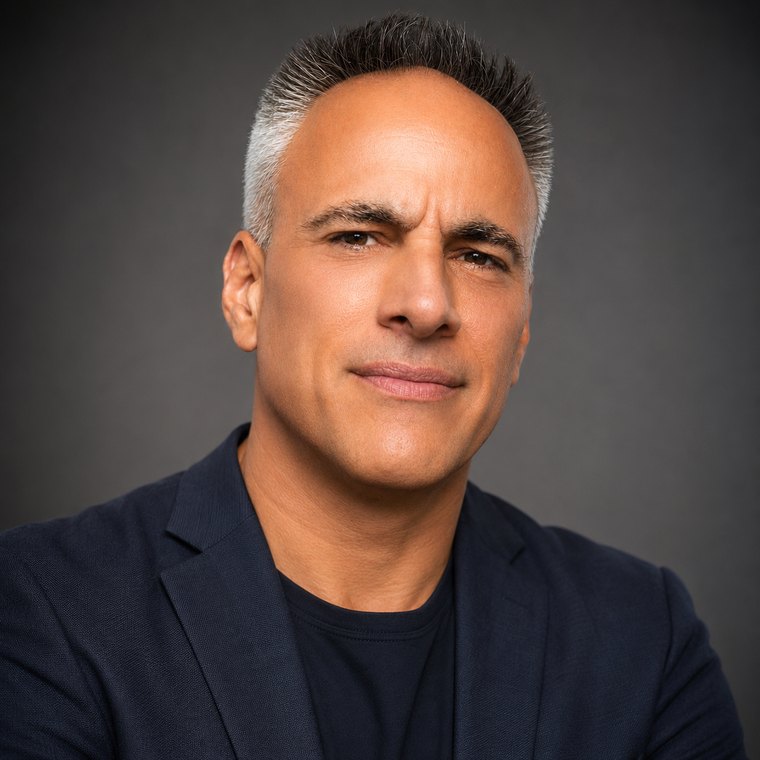
Leo Mann, founder of The Contract Literacy Movement
Don’t Sign That by Leo Mann, a #1 Amazon Best Seller
Who you would be funding

Founded by a contract lawyer, not a fundraiser.

The Contract Literacy Movement was founded by Leo Mann, the pen name of Len Nannarone, a corporate contract attorney of thirty years who has spent his career on the drafting side of the documents in your complaint. Under that pen name he wrote Don’t Sign That, a #1 Amazon Best Seller that reached the Top 10 in Personal Finance.

Chris Vining, a founding director, leads the movement’s community partnerships and was on the ground in Somerville. Workshops are taught in plain English, built around the paperwork people bring with them, and measured afterward, because the report is the part counsel actually reads.

We are new to cy pres, and we will say so. We are not new to contracts. And we would rather be judged on the first report than the first pitch.

Len Nannarone, writing as Leo MannPresident, The Contract Literacy Movement, Inc.
Questions counsel ask

The short answers.

What is a cy pres award?

When a class action settlement cannot practically pay every dollar to class members, because checks go uncashed or members cannot be found, the court may direct the remainder to a nonprofit whose work comes as near as possible to benefiting the class. That redirected remainder is a cy pres award, and the recipient is proposed by the parties and approved by the judge.

Which class actions are the best fit for The Contract Literacy Movement?

Consumer-contract classes, where the harm turns on a document class members signed: bank overdraft and NSF fee cases, auto-renewal and subscription cases, consumer lending and auto finance cases, rental housing fee cases and debt collection cases. Employment classes built on arbitration or onboarding agreements fit as well.

Is The Contract Literacy Movement a 501(c)(3)?

The Contract Literacy Movement, Inc. is a Florida not-for-profit corporation whose application for recognition of exemption under Section 501(c)(3) is pending. Until a determination is issued, gifts are received through our fiscal sponsor, Fiscal Sponsorship Allies. Current status documents accompany every recipient packet, and we will tell you plainly where things stand on the day you ask.

How do we propose you as a recipient?

Email leo@leomannpublishing.com with the case name and where it stands. We return a two-page proposal, a case-specific nexus paragraph, a draft recipient declaration, a use-of-funds plan and our status documents, typically within a week.

What will you report, and to whom?

A written report within twelve months of receipt stating dollars spent, workshops held, people served and what they learned. It goes to class and defense counsel, and we will file it with the court or provide it to the settlement administrator on request.

Do you have any relationship with class counsel, defense counsel or the court?

No. We have no relationship with any party, counsel or judge in any matter, and we never offer or pay anything of value to anyone in connection with a nomination. If a relationship ever arises, we disclose it in writing before anything is filed.

Can an award be split with a legal aid organization?

Yes, and in Illinois and Massachusetts state courts we recommend it. A joint designation lets legal aid take the access-to-justice share while we take the education share, which tends to make the motion easier for everyone.

Keep us in mind for your next residual

Put the remainder where the harm started.

The charities that win residuals are not the ones with the loftiest mission statement. They are the ones that make counsel’s filing easy and send the report back on time. That is the whole of our pitch.

Or write to Len Nannarone directly at leo@leomannpublishing.com